











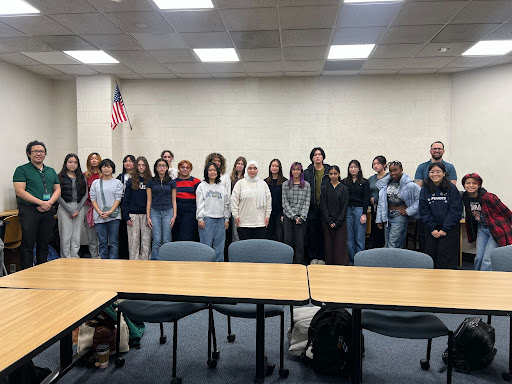








































In 1975, John Hogan walked across the field to receive his diploma at NVOT. 50 years later, Hogan returned as the Bergen County Clerk, educating juniors and seniors about the importance of voting through the County Clerk Office’s annual high school voter registration event.
Hogan stressed the importance of voting, citing that less than half of eligible youth voters actually turn out to vote. One high schooler in his informational video shared, “I just don’t want to.”
Another student said, “I don’t have time.”
Hogan is disappointed that more young people do not turn out to vote because they do not understand the power they have, especially considering the history of voting rights. It was not too long ago that voters in the Jim Crow South had to pay a fee and undergo a nearly impossible literacy test just to cast a vote.
He also stressed how easy it is for students to register, with the only requirements being a valid New Jersey driver’s license and Social Security Number. Thanks to Governor Murphy, voters in all statewide elections can vote by mail or 10 days before Election Day. Hogan said that voting by mail is “an effective way for people to exercise their right to vote. It’s safe, and it’s secure.”
NVOT Social Studies Supervisor Jeffrey Krapels similarly emphasized the importance of voting, saying that “it’s not about politics, it’s about participation.” He additionally praised the voter registration event for making the voting process one step quicker and for being “a great way to remind our students why we vote.”
With Bergen County being one of the few counties that allow poll workers under 18 years old, students in Nicholas Pellegrino’s AP Government class were given the unique opportunity to serve as student poll workers on Election Day. They were able to represent the NVOT student body, exercise their civic duty, and guide voters through the process of casting their ballot.
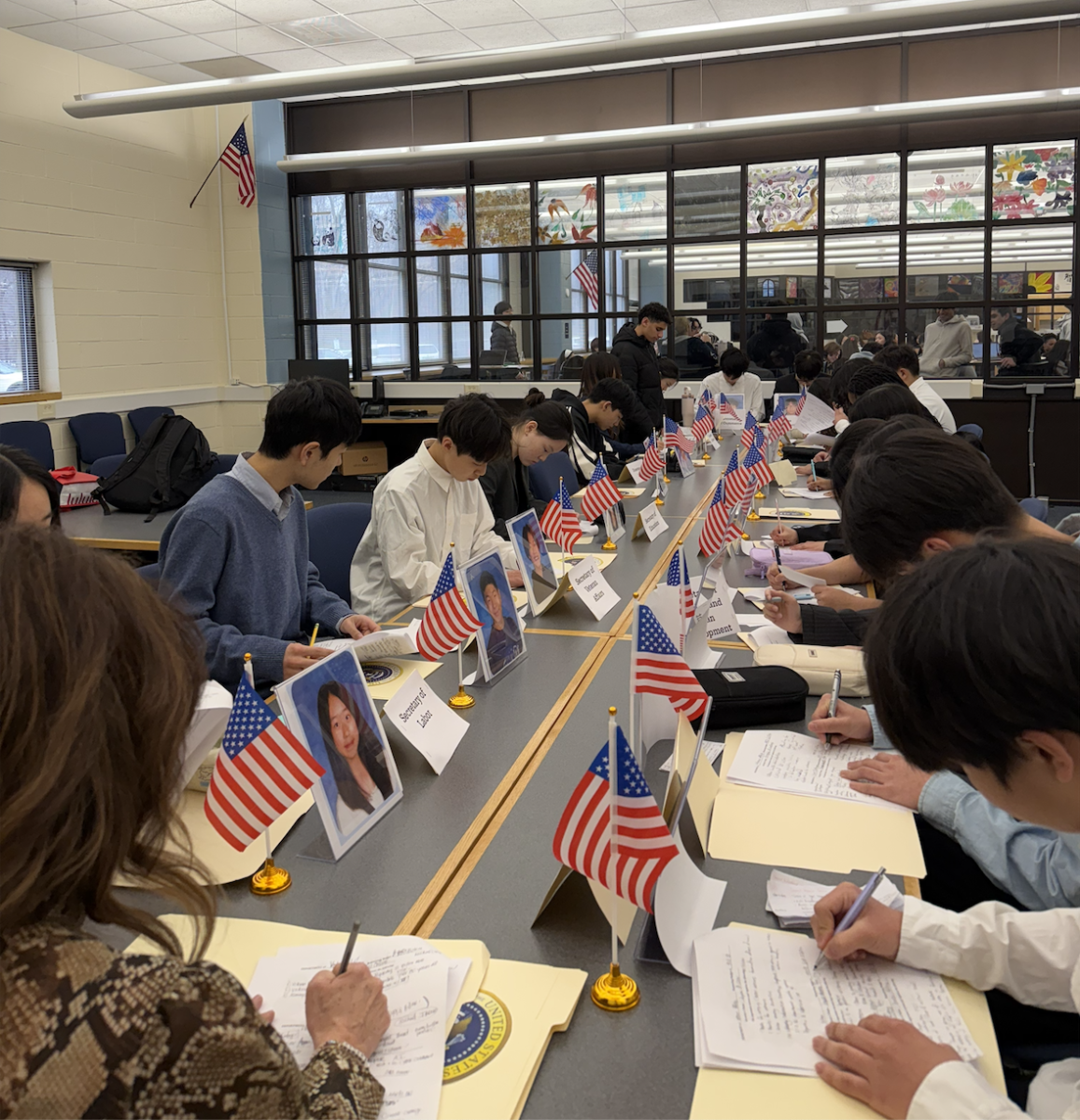
On September 30, AP Gov students attended an in-school training session in the media center, where a representative from the Bergen County Board of Elections taught them how to check voters in and operate the electronic voting machines. Students were paid $50 for attending the training session and $160 per shift on Election Day.
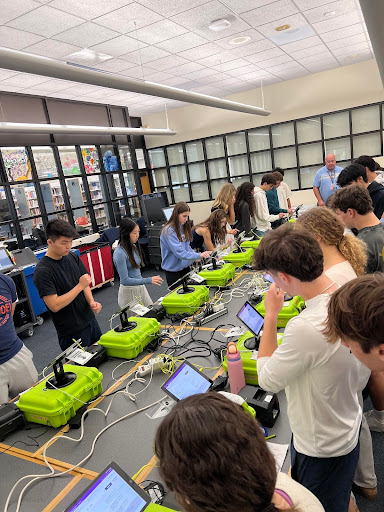
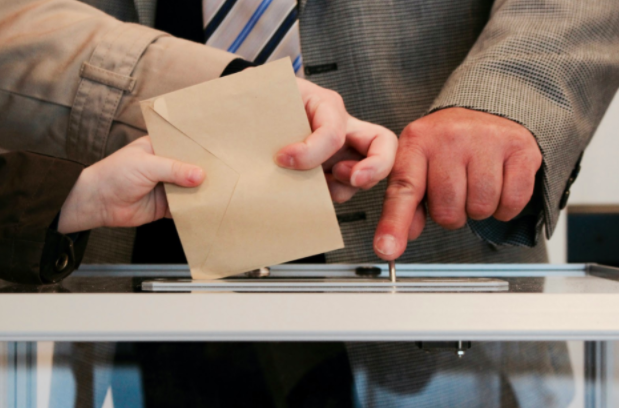
On November 4, students arrived at their assigned voting locations across Bergen County, working the polls from 6am to 8pm. They were moved around each station, starting from the voter check-in desk, to the electronic voting machines, and finally to the ballot box. At the check-in desk, students asked voters to confirm their name, date of birth, and address. Junior Giuliani Rivera stressed the importance of not asking voters for their photo ID. “It’s against the law,” she recalls from her training class. At the voting machines, students went behind the curtain with the voter to activate the machine and guide them through the directions. From there, they stepped back and closed the curtains for the voter’s privacy and then directed them to the other side of the room to drop off their ballot in the dropbox.
AP Gov students had a pleasant experience working the polls. Junior Orlee Drillich said, “I walked in not knowing what to expect. Right when I got there around 5:30 am, the workers were incredibly friendly and helpful. It was also super nice to see so many citizens coming to vote even though this wasn’t a presidential election.”
“It’s such a great experience because you truly realize how much the votes matter,” added Rivera.
For senior Beyla Schweizer, working the polls was an unexpected learning experience. “It was really nice getting an insight on the voting process, especially for next year when I can legally vote,” Schweizer said.
Students who participated are looking forward to getting involved again. “I would love to do this again next year,” Drillich added. Furthermore, although she was not a poll worker this year, Neha Anoo said, “After hearing about the positive experiences that my friends had, I look forward to working the polls during next year’s spring primary.”
While many NVOT students may not be old enough to vote or run for public office, all of us can find our own ways to contribute to the democratic process, whether it be by registering to vote or working the polls.