










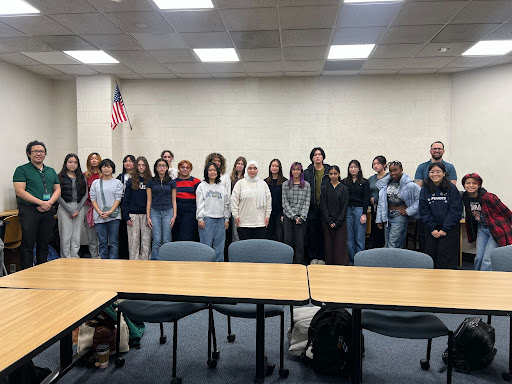




















From brainstorming story angles to designing pages that match each writer’s vision, the students behind NVOT’s Coldwater Literary Magazine Club spend months turning creativity into a published collection of student expression featuring poems, short stories, and original designs by members.
Though it may not be as well known compared to other student media outlets at the school, the Coldwater Literary Magazine serves as one of NVOT’s few spaces dedicated entirely to creative writing and artistic freedom. According to the publication’s staff, the goal of this year’s magazine was not only to showcase student talent, but also to create a welcoming environment where writers and designers could experiment creatively and share personal work with the school community.
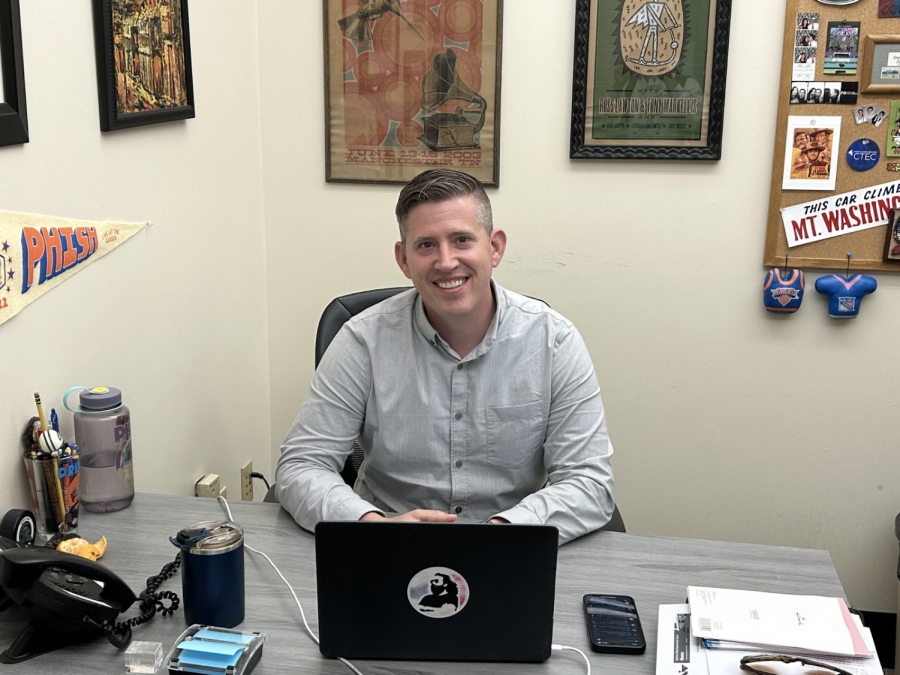
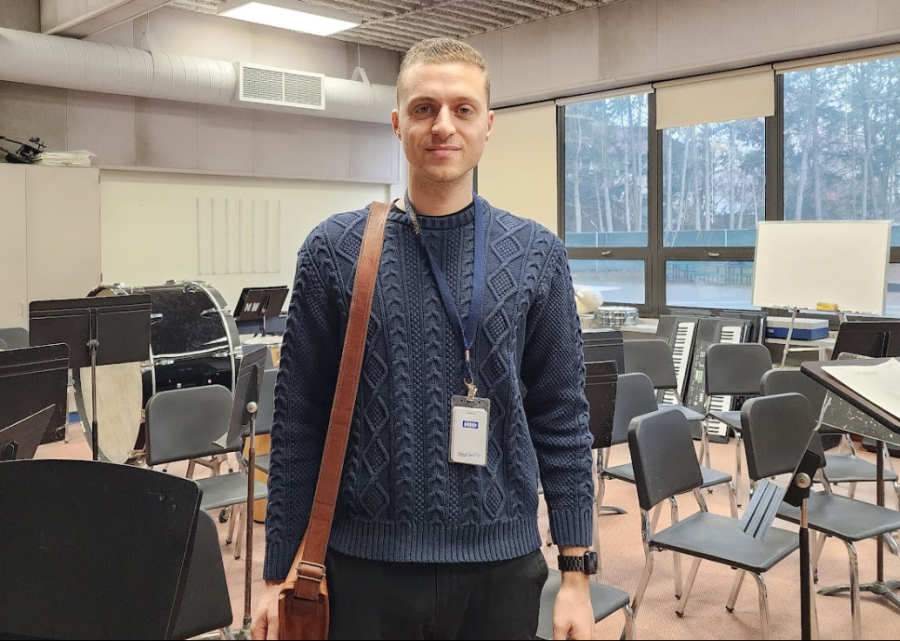
“[Coldwater] is important because it is one of the only clubs that highlights a safe space for personal and creative growth,” Coldwater advisor Justin Baumgartner said. “It allows freedom to express yourself through creative writing which is such a healthy outlet to express emotions and ideas.”
Baumgartner explained that the funds for the magazine come from member dues and fundraising. He said, “This year, with our donuts and hot chocolate fundraisers, we were able to raise a decent amount to help offset the costs of the magazine.”
Behind the scenes, students worked through writing workshops, peer editing, and design planning in order to prepare each piece for publication in the literary magazine.
For example, Coldwater member Oliwia Duma strengthened her writing during Coldwater’s workshops where she received creative enlightenment. “Coldwater did help me with a lot of foundations and a lot of storytelling elements [such as] the steps to writing a good story,” Duma explained. “In my poem, I did use a lot of literary devices that we went over in Coldwater, and the Coldwater club helped me peer edit my piece, and they helped me structure my poem.”
Unlike the Lance, which focuses on reporting news and events, Coldwater publishes creative works such as poetry, short stories, personal narratives and other forms of imaginative writing. The magazine allows students to explore emotions, experiences and ideas through artistic expression rather than traditional journalistic storytelling.
For Duma, submitting work to the magazine was both exciting and intimidating.“I feel kind of accomplished,” Duma said. “It is nerve-racking having others critique or look at my work. However, I do feel proud that I was able to overcome the stress on the nerves.”
In addition to writers, student designers also play a major role in visually bringing the magazine together, providing a design tailored to each student’s piece in order to emphasize respective tones, themes, and settings.
Junior Isla Luby, a designer-in-training for Coldwater, described the challenges she faced in fulfilling her responsibilities for this year’s literary magazine. As a designer trainee, Luby had the duty of laying out her own piece, transforming her own ideas and themes into a cohesive outline reflecting the essence of her piece.
“The process was challenging at first because I had to figure out how to turn just a few words about the vibe of my piece into a full visual design,” Luby said. She took the Hollywood-inspired feel of her piece into account, incorporating “film-style visuals and a vintage cinematic aesthetic.”
Luby explained that although the process involved trial and error, experimenting with different styles ultimately helped create a stronger final product.
Taking on more of an executive position, senior lead designer Weiwei Qiu explained her role in developing the magazine: “I primarily oversee the visual direction and voice of the project—including layout, style, formatting and more,” she described.
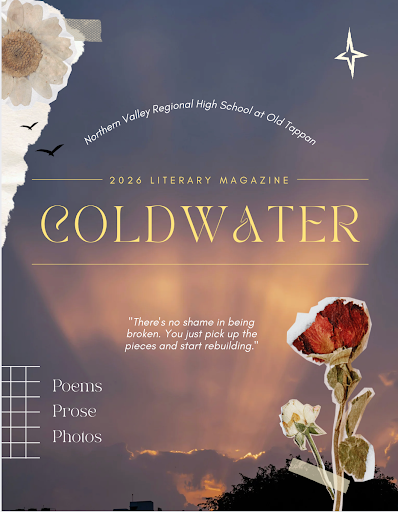
Qiu emphasized the creative process behind design, explaining, “Aside from some direction provided from the members on how they wished to see their work visually represented, there was very little push on the magazine’s overall look.” As a result, she and senior co-designer Irminia Luboch drew inspiration from a quote they found: “There’s no shame in being broken. You just pick up the pieces and start rebuilding.” Qiu described that the statement inspired them to champion a scrapbook look for the magazine where they “visually conveyed that sense of putting pieces together—through the scrap symbolism—to make something concrete; our magazine.”
Like Luby, Qiu admitted that each year, designing the magazine has its difficulties. She emphasized how designers are restricted by page limits which means having to sacrifice visuals in order for a work to be properly formatted and fully included in the magazine.
Moreover, Qiu revealed that designers are responsible for more than just the surface-level visuals in the literary magazine. “We also do all of the formatting, which often takes a lot of time—bringing us to another regular challenge of designing the magazine: time,” she said.
While The Lance focuses on news, sports, and updates within the school community, Coldwater gives students an opportunity to explore a different style of writing centered around creativity and personal expression. Despite their differences, Baumgartner believes both publications play an important role at NVOT.
“The Lance operates as a school community newspaper,” Baumgartner said. “Coldwater is all about exploring creativity and expression through writing, creating beautifully curated pieces that express their own identity.”
As the newest edition of the literary magazine reaches students this June, increased awareness towards the club will be helpful in spotlighting the annual achievements of both the magazine and Coldwater. Baumgartner emphasized the importance of promotion for the club, explaining that “It is one of those things where the students have full control on the longevity of the club. If people keep coming out for it, then it will still exist.”
Together, student participation is what preserves the safe space the club provides, allowing student writers like Duma, Luby, and Qiu to develop their prose and share their voices within the community.