



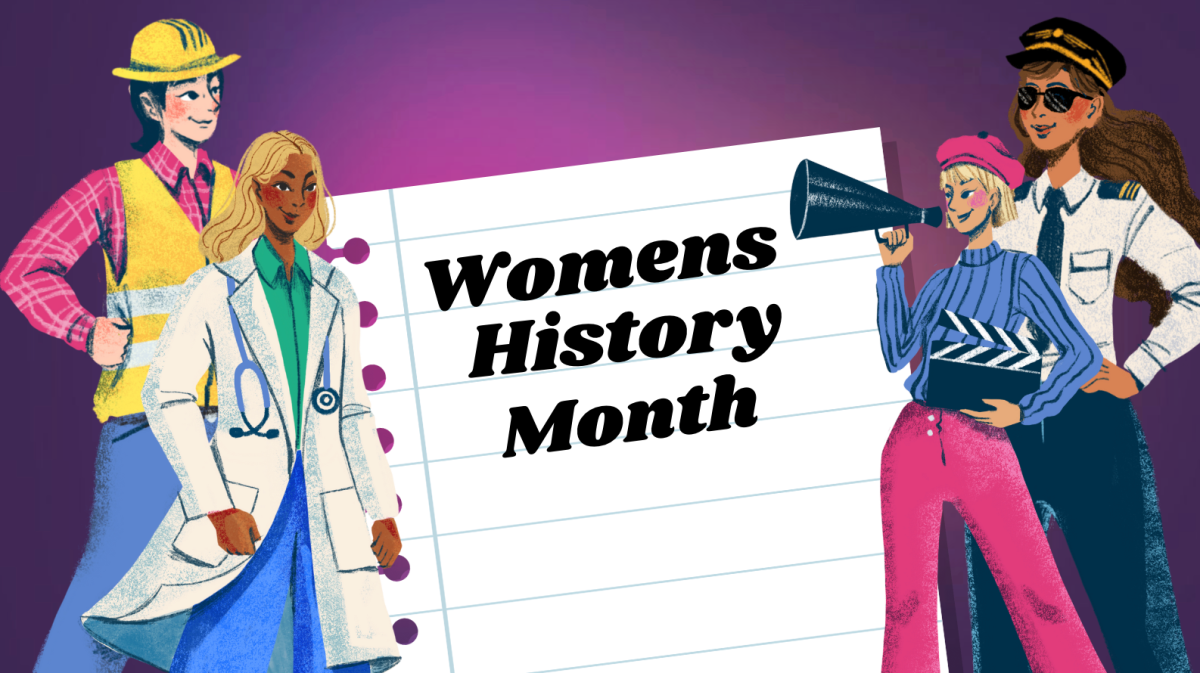

















































Starting out as “Women’s History Week” in 1978 but extended to the entire month of March in 1987, Women’s History Month is a celebration honoring women’s contributions to history and society and the progress made to further the lives of women everywhere.
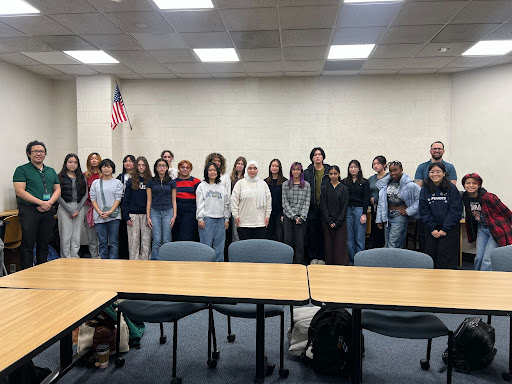
This month, The Lance would like to highlight the significance of feminism in the lives of empowered women at Old Tappan.
Women do things every single day that would have been impossible without the efforts of civil rights activists. Women’s employment did not become common until the late 19th century; gender-based legal barriers for women-owned businesses were not lifted until 1988; women were prohibited from voting until 1920. Feminists led the way towards all of these changes. Wellness Coordinator and School Psychologist Gina Restivo said, “I am a single mother with multiple degrees and jobs. I own my own company. I am politically active in my local community. I foster my talents. I take time for myself.” She continued, “The opportunities and choices I am afforded in this lifetime are all due to the fighters who started this cause and conversation.”
Math teacher and volleyball and softball coach Melissa Landeck added, “I have never been denied any opportunities. However, I am aware that many women older than me may not have had the same experiences, so I am grateful to those who paved the way.”
It may seem surprising, but American women could not buy their own home until 1974. Student Assistance Coordinator Lydia Greco said, “In the past, women needed a man to buy property. I wouldn’t even have been able to have a credit card as an adult in the year that I was born. I am grateful for the women who broke down barriers.”
Junior Katherine Finn said, “It’s very important that we acknowledge the past so that we can continue actively working towards equality, because there’s always minds that need to be changed, and always little biases in our society that we need to challenge in order to truly respect and uplift each other.”
Finn highlighted another barrier that girls and women still face: the stereotype that women are frail. Finn recently went on the FBLA field trip, and everyone needed to put their suitcases in the compartment underneath a bus. “The people in charge said, ‘Okay, boys, help the girls get their suitcases into the bus. Girls, you can just leave your suitcases here,’” Finn recalled. “While I think that’s a noble idea, I feel like it’s very patronizing, and we shouldn’t assume that boys are stronger than girls.”
Spanish teacher Lisa Veit also encountered gender-based prejudice when she was a Scout leader. She shared, “Being a female Scout leader, before the girls were allowed to be Scouts, that was a huge thing, and there were microaggressions every day.” For instance, she revealed, “All I ever heard was, ‘boys will be boys,’” and that she was “surrounded by male leaders telling me what is acceptable behavior.”
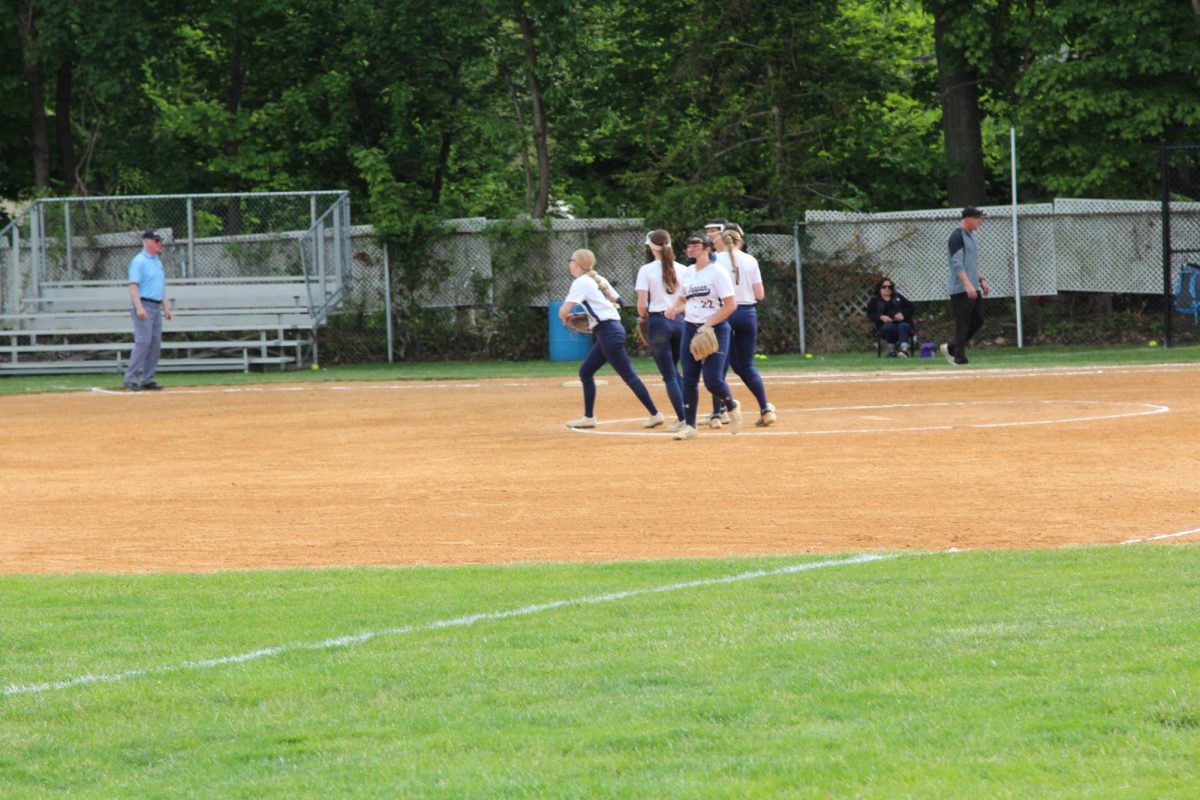
Beyond giving exceptions to male behavior, women are often assumed to be in supporting roles rather than in leadership positions. Basketball coach and P.E. teacher Lindsay Steffner, “When coaching basketball, most referees assume my male assistant is the Head Coach and I’m the Assistant Coach,” she said. This bias often requires women in higher positions to expend extra authority to assert their dominance.
Although instances of discrimination like these may seem small to some, they have a profound effect on the way society views women and the way women view themselves. This is why it is so critical for girls to support each other.
For example, Veit is dedicated to advocating for women as the chair of the New Jersey Education Association (NJEA) Women in Education Committee. The committee aims to empower and uplift women educators by discussing supportive legislation.
Furthermore, as a woman who owned her own condo, Veit advised, “be independent financially,” highlighting how doing so allows one to retain freedom and autonomy.
Business teacher and FBLA advisor Suzanne O’Sullivan also underlined the importance of financial independence, stating that she teaches her daughter “about money and how to be self-sufficient.”
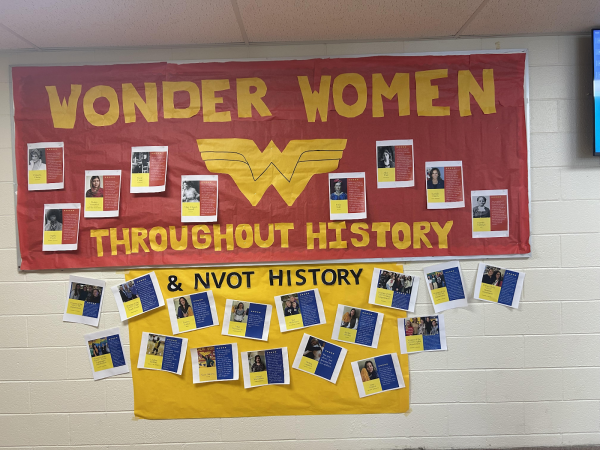
NVOT has been uplifting women this month as well by observing the contributions of historical figures and local women. Restivo led the construction of a Women’s History Month-inspired bulletin board in A-hallway which spotlights global activists such as women’s education advocate Malala Yousafzai and local heroes like School Nurse Lauren Lopez.
However, bulletin boards and committees are not the only ways to stand up for women; even small-scale, feminist actions have a substantial impact. For example, Greco explained the feminist practice of “amplification.” She described that in professional settings, “a woman or multiple women will repeat what another woman said in a meeting until it gathers attention. This is because men can often ignore women’s contributions in meetings.”
Steffner also finds ways to advocate for herself. She said that when referees mistake her for the assistant coach, she will “stand in front so they don’t keep making the same mistake every time they referee a game of [hers],” and that she introduces herself “first to set the tone.” Furthermore, she recalled herself challenging sports-based microaggressions by playing five-versus-five basketball games in a time where women were expected to play six-versus-six games “so they didn’t have to run as much.”
In addition, Restivo said, “Women have been given a tough name in terms of being ‘too much’ or ‘needy.’” In order to combat this, she shared, “I’ve reduced my use of the word ‘just’ because it diminishes the thing I’m asking/stating/doing and I’ve learned that my actions/thoughts/contributions deserve to take up as much space as they need.” She also added, “I am working on asking for more things I want/need (as opposed to waiting for someone to offer).”
Another way to battle microaggressions is to pass down values of gender equality to one’s children. For example, Steffner said, “My husband and I are raising our daughters to be strong, independent, and unapologetic with the hopes they can do literally whatever they want to do in this world.” She stated that her family values fairness in the household, explaining that her daughters “have chores because they are a part of our home not because they are girls, [and] we all take responsibility of the home and do what we need to do as a family unit.”
Finn also said that if she had a daughter, she would “teach her to expect respect and to not accept anything less. [She] would teach her to call out when someone’s looking down on her, and [she] would teach her to support other girls.” She added that she would encourage her daughter to “not base her value in how other people, especially men, view her.”
Highlighting the women in our community should not end this month. We must continue to show our appreciation not only for their sakes, but for ours, too. It is imperative that we support women and girls, fighting year-round despite pushback and fear of societal expectations. We must aspire to keep breaking generational barriers for women—we must aspire not to sit idly, but to strive for the best for ourselves and future generations.
American writer and civil rights activist Maya Angelou once said, “Each time a woman stands up for herself, without knowing it possibly, without claiming it, she stands up for all women.” The courage and perseverance of the incredible women who fought for gender equality caused a ripple effect, breaking generations of patriarchal comfort.