



































































During most high school games, the attention stays locked between the lines.
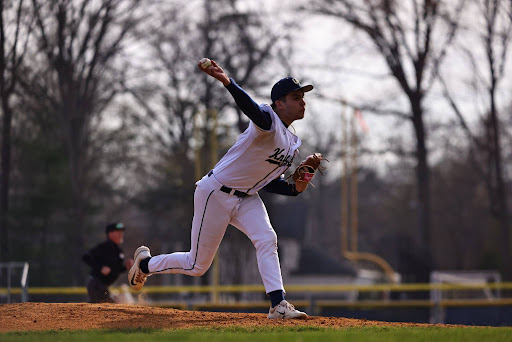
But lately at NVOT, there has been another presence surrounding the field—professional scouts stationed behind home plate, radar guns raised, every time Selden Kolkebeck steps onto the mound.
As one of the top pitching prospects in New Jersey, Kolkebeck has recently drawn interest from multiple Major League Baseball organizations, turning routine spring matchups into opportunities to perform in front of numerous professional evaluators. The standout right-hander has already committed to continue his academic and athletic career at Columbia University, adding Division I success to an already impressive rise.
For Kolkebeck, the attention has been both exciting and surreal.
“Having MLB scouts at my games this season has been both enjoyable and nerve-racking at the same time,” Kolkebeck said. “I’m really just having fun, and I’m grateful the scouts want to come see me do what I love.”
That mindset has become one of the defining parts of his development as a pitcher.
Kolkebeck has grown into one of the premier arms in the area while helping lead Old Tappan against some of the toughest competition in New Jersey. With a fastball that has clocked into the mid 90’s, Kolkebeck has been a really tough matchup for any hitter he’s faced this year.
Longtime Head Coach Tim Byron believes Kolkebeck’s physical tools immediately stand out to professional organizations.
“The biggest thing is his body type,” Byron said. “Selden is tall and flexible, and they’ll be able to put weight and muscle onto his frame.”
But Kolkebeck’s rise has gone far beyond physical ability alone.
According to Byron, his development over the last two seasons has transformed him from someone who simply threw hard into a complete pitcher.
“Selden has really focused the last two years on his pitching mechanics, which has allowed him to be really confident in his abilities,” Byron said. “He now pitches, whereas before he was a thrower. He has a really good grasp of reading the batter and working off their weaknesses.”
Professional organizations evaluate far more than velocity alone. Scouts closely monitor mechanics, command, body language, work ethic, and how pitchers respond under pressure—areas where Kolkebeck has continued to impress throughout the season.
And while the radar guns behind home plate create pressure, Kolkebeck has remained grounded during the process and focused directly on the goals he set long before the scouts began attending games.
“Staying focused this season hasn’t been easy, but I’ve managed it pretty well,” Kolkebeck said. “It’s pretty intimidating seeing a dozen radar guns behind the backstop, but I try not to notice it. I’m just focused on playing the last season with my boys and trying to win a state championship for OT.”
Teammates say that the calmness and confidence are part of what makes Kolkebeck stand out.
“I would say Selden’s attitude separates him from a lot of other pitchers,” said Catcher Anthony Onnemebo. “He’s incredibly hard to shake internally, and that confidence shows in his performance.”
Byron also believes Kolkebeck’s delivery and command separate him from many pitchers at the high school level.
“Selden is so free and easy with his delivery,” Byron said. “The ball comes out of his hand effortlessly, and he’s able to throw all of his pitches for strikes.”
That combination of projection, confidence, and command has continued to attract scouts through the spring.
“I think teams see a big, tall guy with a lot of upside potential and room for muscle growth,” Kolkebeck said. “I think the fastball velocity is what attracts scouts initially, but the amount of strikes and secondary pitches are what keep them coming back.”
Catching for Kolkebeck for multiple years has given Onnembo a first hand look at the traits that continue to attract professional scouts.
“Selden is really easy and fun to catch because he’s incredibly accurate,” Onnembo said. “We’ve played together since we were kids, so we’re usually on the same page with everything.”
Onnembo also pointed to Kolkebeck’s adaptability as another overlooked strength.
“One thing people don’t really see is how adaptable he is,” Onnembo said. “Against Bergen Catholic, the mound had a weird cement block near the rubber, so he ended up pitching with one sneaker and one metal cleat—and still competed.”
With professional baseball now feeling closer than ever, Kolkebeck’s focus remains on finishing the season strong with his teammates before beginning the next chapter of his baseball career at Columbia University.
“Having the opportunity to play at Columbia is truly amazing,” Kolkebeck said. “I’m excited to pitch close to home so family and friends can come watch. I’m very grateful and blessed to have the tough decision of going to college to play ball or possibly pursuing my dream of professional baseball.”
Although the radar guns and scouting reports may not follow him from game to game, the foundation behind the attention was built long before the scouts arrived—through years of preparation, discipline, and the mentality to compete against anyone standing in the batter’s box.